Read Part One of a three-part interview with Tim Chester, church planter and author, where he discusses his new books, Delighting in the Trinity and From Creation to New Creation.
Can you tell us a little about yourself? Your background, interests, and passions? What current projects are you working on?
I grew up in Reformed Baptist circles. I’m part of a missional church now, but theologically I’m still Reformed and still baptistic!... continue reading

Each day we’re seeing more suffering from Japan on our TV screens and in our newspapers. We blogged on a Christian response to friends' questions here: but we also wanted to point you to some great, helpful readable books which deal with the subject in a bit more depth.
For a readable, practical and heart-felt look at faith in the face of suffering: If I were God I'd end all the pain, by John Dickson. Currently £4.79 (20% off).
For a single chapter on the issue, which requires careful reading but is well worth it (as is the rest of the book): The Reason for God, by Tim Keller. Currently £7.65 (15% off).
For a more in-depth look at suffering and how Christians should deal with it in our own lives as well as in the news: How long, O Lord?, by Don Carson. Currently £13.
If there is another resource that you’ve found really helpful in thinking through this difficult issue, do let everyone know about it by commenting below. We can then point people to it on our website, or locate it cheaply elsewhere if we don’t have it.
Here's (probably) the last thing we'll be posting about the new Rob Bell book - a round up of some helpful responses from the US blogosphere, where this has been the hottest topic this year.
And finally, Martin Bashir interviewing Rob Bell on the controversy (in a very Paxman-esque style):

What effect would persecution have on your evangelism?
For the last few days I’ve had the privilege of spending some time with a Christian who lives in one of those countries where Christians are persecuted, and where there is political upheaval and significant unrest. It’s a life so dangerous that very few people know who they are or where they come from.
But what they said is worth being made public.
I asked them how discrimination and the risk of violence affect their mission and ministry. They smiled and said something that will stick with me for years.
“It changes nothing.”
Which is a great challenge to those of us in the West. There is no such thing as being in a situation where it is OK to give up serving. No context is a “get out of mission free” card. If our speaking about Christ produces laughter, derision and scorn; if our living for Christ means we lose out at work, in relationships or with our family; “it changes nothing.”
“For we are God’s workmanship, created in Christ Jesus to do good works, which God prepared in advance for us to do” (Ephesians 2 v 10).

A major topic of conversation in our office today, like in most offices up and down the country and round the world, has been what’s happened in Japan.
How do we respond to such horrendous suffering? How do Christians begin to trust a good God in the face of such facts?
In some ways, now is not the time for anything other than sorrow. giving what we can, and, in a Christian’s case, prayer. But still, some people demand answers from us: here, for what it’s worth, is what we think we might try to say.
Some other helpful and interesting resources:
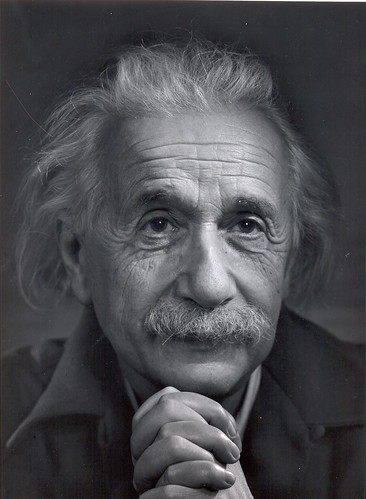
Albert Einstein probably wasn’t thinking about the gospel of Jesus Christ when he said this, but it’s a great reminder for Christians who teach the Bible to adults or children, or who are trying to tell people the gospel message (in other words, all Christians!):
“If you can’t explain it simply, you don’t understand it well enough.”
A great truth to ease you into your week.
He has committed to us the message of reconciliation. We are therefore Christ's ambassadors, as though God were making his appeal through us. 2 Corinthians 5 v 19-20

…happiness, as the Chinese are finding, according to this report in the Guardian.
It’s interesting that this should come at the same time as the Government in this country is beginning tentatively to suggest that happiness is not inextricably linked to economic wealth; that (shock! horror!) you can be rich and sad, and poor and content.
The article on China suggests that the reason is an imbalance in wealth within the country; that although everyone has been getting wealthier, some have been getting much more wealthy than others: “Across China, people have rediscovered the well-rehearsed truth that material satisfaction is relative.”
I wasn’t aware that this was a “well-rehearsed truth”, although coveting something that isn’t yours, instead of enjoying what is, has been a problem since the Garden of Eden. Just ask Zacchaeus whether being the richest guy in town makes you happy.
If only there were a way to escape this view that everything comes down to material wealth. If only there were a “secret of being content in any and every situation … whether living in plenty or in want” (Philippians 4 v 12).
Paul knew the secret. It was to be able to say, and mean, that “for me, to live is Christ and to die is gain” (Philippians 1 v 21).
I’m not good at really meaning that. But I can see that, if I really lived that out, it wouldn’t matter at all to me whether I was “rich”, “poor”, or “poorer than them, but richer than them”.
Wonderfully, the church in China is growing at a stupendous rate, with thousands meeting the Christ who gives contentment each day. Perhaps that huge nation will start getting happier after all…
 How the Bible is like The Sun

It’s that time of year. Someone always asks: “What are you giving up for Lent?”
My usual answer is “nothing”. I don’t tend to do that kind of thing. But this year, the question has got me thinking. It has got me wondering whether maybe I’ve given up too much already and that my challenge for the next few weeks is to give up giving up…
So no giving up sweets or ice-cream (which remain very much at the centre of my diet!) But I’m becoming increasingly conscious that I’ve already given up too much of what is really important.
Like the first-century Christians found at Laodicea, it’s so easy to let passion for Christ dwindle and become lukewarm (Revelation 3 v 16). Evangelism in the local community; prayer for non-Christian friends who don’t seem like they’ll ever be interested; reading the Bible simply because we can listen to the inspiring words of our friend and Lord; these are the things which can slowly fade out of life.
Yes, there’s no doubt about it. I’ve been giving up on way too much in recent months.
Here’s what I’m doing this Lent. I’ve texted a friend and asked them to pray that I would “never be lacking in zeal, but keep [my] spiritual fervour, serving the Lord” (Romans 12 v 11). I’m giving up giving up.
If you’d like to join me on my hastily-arranged Lent campaign to give up giving up, text a friend that verse now and ask them to pray; and if you like, share what you’re giving up giving up in a comment below. That way, hundreds of people can pray for you… and you for them.