Exciting times in the office this week with filming well underway for our innovative new product, Wonderfully Made.
Wonderfully Made is a pre-evangelistic resource for use within toddler groups - using DVD clips to promote discussion of parenting topics from a biblical perspective.
Watch this space for more information!

There have been celebrations this week in the Anglican church. After much debate, the Church of England has paved the way for women to become bishops. Campaigners are declaring victory, justice, equality, cultural relevance and more. The legislation - which most agree, is far more generous than previous drafts - now proceeds to parliament for approval.
Of course, not everyone has been celebrating. Some have been saddened, if not surprised, by the change. Some are worried that the legislation still does not do enough to protect the integrity of those who hold firmly to the biblical model of male headship. There are lingering fears for the future - on a personal and corporate level. The discussions and decisions are not over yet.
So, how do we pray for those impacted by the vote? Maybe 2 John v3-6 is a place to begin. The context is different but the words are still dripping with poignancy.
An awareness of grace, mercy and peace (v3)
Pray that all those thinking through the implications of this week's vote will be mindful of their status as children of God - their privilege, the sufficiency of God's Word in the hands of the Spirit within them, their utter dependence on the Lord of all things and their call to be humble before his sovereignty.
The joy of truth (v4)
Praise God for those men and women who have spoken truth - sometimes at great cost to themselves - and remain committed to God's Word. To hear God's words spoken faithfully is a wonderful thing in any circumstance.
The mandate of love (v5)
Pray that every decision, every discussion, every report, every email will be seasoned with love in ways that honour God and give helpful witness to a watching world.
A passion for obedience (v6)
Pray that the love that is seen is worked out in obedience to the Lord - that faithfulness continues to be a path to pursue whatever the context, the worries and the energy levels.
There are no easy answers. But love and truth hold firm. Let's not stop praying for the Church of England now.
Revenge porn. It’s the sort of issue we’d like to assume is just “out there” rather than inside the church. But it isn’t.
We’d like to think that all the single people in the congregation are walking closely with the Lord – and that all the marriages are rock solid - but they’re not. Some are sleeping with people to whom they are not married. A few are taping their physical pursuits. And when the break-up comes, occasionally one disgruntled party posts explicit images online to humiliate, to hurt and to hate.
It’s not a weekly occurrence in the average congregation but it happens. And when it does, lives can be wrecked – emotionally and spiritually.
How would your church respond? Would there be compassion? Rebuke? An awkward silence? It’s worth taking some time to think it through before it hits …... continue reading

Rachel Jones, The Good Book Company's editorial intern, is about to take 3 months off. We thought you might like to know a little of what she's getting up to ...
What are you going to do?
I’m spending 2 months in a South Asian country with the organisation Serving In Mission. I’m hoping to learn what it’s like to be a cross-cultural Christian worker—so I’ll be getting up to a variety of things, from running activities at a playgroup at a development project, to trying my hand at learning the local language. The writing and editing training I’ve received from the great creative minds of The Good Book Company may well come into use too…
Why do you want to serve God in this way short term?
Like many Christians, I’m compelled by Jesus’ command to makes disciples of all nations, and so I hope to be able to contribute something towards that great commission. Secondly, It’s often said that in our churches, some are called to serve God overseas long-term, while others are to “send” them, by providing financial and prayer support. Which is my role? This trip, although short, will better equip me for either.
How can we pray for you as you serve?
As I’ve been doing some background reading, I’ve been really challenged by the vision of what Jesus gave up to rescue us—giving up all the glories of heaven to become fully human, and ultimately dying on the cross. So cross-cultural workers, in a (lesser) sense of the word, aim to become fully “incarnate” in the host culture. That means living as much like the people they’re trying to reach as possible, and trying to fit into the culture, however uncomfortable that may feel. So please pray that instead of worrying about physical discomfort and distance from loved ones, I would keep what Jesus has done for me at the forefront of my mind, and be as ready as he was to listen to, understand, love and serve others.
But much more, please join me in praying that God would grow the church in South Asia, so that on the last day, there would be many from that culture among the scene described by John in Revelation 7:9-10:
“After this I looked, and there before me was a great multitude that no one could count, from every nation, tribe, people and language, standing before the throne and before the Lamb. They were wearing white robes and were holding palm branches in their hands. And they cried out in a loud voice:
‘Salvation belongs to our God,
who sits on the throne,
and to the Lamb.’”
The Trojan Horse 'Islamic radicalisation plot', in which several schools in Birmingham stand accused of enabling (or not preventing) the potential radicalisation of their overwhelmingly Muslim pupil bodies, has revealed what a threat to Christianity the faith is.
By faith, I don't mean Islam. I mean secular 'tolerance'.
Of course, it's serious if state-funded schools are having speakers in assemblies who promote extremist viewpoints; if pupils are not taught properly about faiths other than Islam; if girls are not given the same opportunities as boys.*
But what's most serious is lines like this, which came from MP Chris Bryant on the BBC's Question Time the other day:
“Of course it’s not wrong to be devout and conservative and to have conservative views, but it is wrong to separate girls and boys or to treat girls differently.”
Why should that worry you? Because Chris Bryant has done the classic mid-sentence switch that tolerant relativists all end up doing.
The Intolerantist faith
Notice the first part of his sentence is classic tolerance. It’s fine for you to believe whatever you believe. Who is anyone to tell you what to think, or to tell you that what you think is wrong? This is a tolerant country, where we welcome people of all faiths.
But the second part of his sentence completely undermines the first part. Because if your religious conservatism means you think your sons and daughters should sit separately in class (or that, if you’re a teenager, you should sit apart from the opposite gender in class), well that’s not fine anymore. That’s wrong. And you’re wrong.
In other words, you can be a religious conservative as long as your religious conservatism doesn’t lead you to do things that I don’t think are right.
That’s intolerant. It’s the intolerance of a ‘tolerant society’, which decides the boundaries of acceptability, and then polices them fiercely. It’s the intolerance of tolerance—we might call its advocates devout (in)tolerantists.
And it’s an issue for Christians. Because despite all the jumping up and down, Muslims form a very small proportion of the UK population. Radical Muslims are not going to be in charge of our laws and courts anytime in our lifetimes.
But radical (in)tolerantists already are. And how long is it before there’s a news item about a school, or group of schools, where some of the governors stand accused of:
How long before someone sits on the Question Time panel and says: “Of course it’s not wrong for evangelical Christians to be devout and conservative and to have conservative views, but it is wrong to think what you do about sexuality, act like you do in evangelism, promote what you do as a school governor.”
If you’re an evangelical, your beliefs sound just as radical, extreme and unpalatable to a secular (in)tolerantist as a conservative Muslim’s do. Don’t be fooled by the first half of the sentence: it’s the second that shows the danger.
*Although let's make two qualifications; it's serious if non-state-funded schools do these things too—would you be fussed about the educational background of a radicalised terrorist? And second, it's amazing how segregation of girls and boys seems anathema, when I attended a very 'English' and wholly segregated school. It was a boys' grammar school.
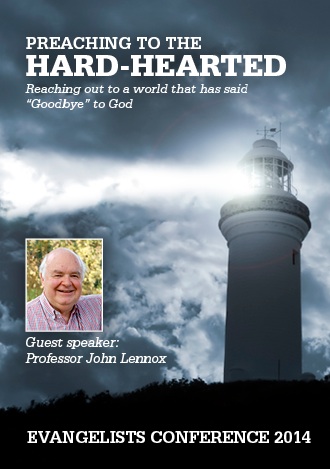
The rising generations in the UK are growing up in a world that has said “goodbye” to the idea of God. In the media, through their education, and in the culture, they have been told repeatedly that the idea of God is old fashioned, irrelevant and out of touch.
Although the numbers who profess to be purely atheist are relatively small, for all practical purposes many live and think with no reference to, or thought of God day by day, and are hardened to any suggestion that there may be something more to life than biology, genetics and physics.... continue reading