If you're anything like me you'll be spending at least part of your weekend taking in the sights and sounds of the various social-networking sites. Between Facebook, Twitter, Google-plus and the blogs, there will be moments that amuse, a few that inspire, the odd one that makes us think... and the inevitable gaggle that shock, dismay, offend or simply make us shiver at their inappropriateness.
Words are powerful - they can build up others (Ephesians 4: 29) or they can wreak great evil (James 3:5-6). And, as such, should never be typed lightly. But how often do we, as Christians, sit and think about the effect our posts and status updates have on those around us?
Earlier this week, local pastor, Gavin McGrath wrote an interesting article calling for a return to modesty on social networking sites.
Earlier this month another minister, Mark Meynell helpfully suggested that before we post our thoughts on the internet we need:
They're principles worth pondering as we engage in the very public world of cyberspace.
Or maybe next time we log on, we should simply discipline ourselves to read a spot of Colossians 3 before we begin to type:
Therefore, as God’s chosen people, holy and dearly loved, clothe yourselves with compassion, kindness, humility, gentleness and patience. Bear with each other and forgive one another if any of you has a grievance against someone. Forgive as the Lord forgave you. And over all these virtues put on love, which binds them all together in perfect unity.

The Command of 1 Peter 3 v 15-16 seems reasonable enough:
always be prepared to make a defense to anyone who asks you for a reason for the hope that is in you…
But the reality, at least for me is always a little more flustered. My problem is that often I have too many answers - attacking the question from different sides! Where do I start?
That's where Chris Sinkinson's latest book is a real God-send (via IVP!). Confident Christianity is a breezy survey of the many faces of apologetics that makes real sense of all the competing approaches that we are offered. The concise chapters look at and compares the various merits of different approaches to how we answer questions, and applies them to some key questions that are raised.
I loved the helpful chapters overviewing Philosophy, Archaeology and "presuppositional apologetics". It put together for me (for the first time), the different ways these arguments can be helpful, and, crucially, when they are best deployed. The tone throughout is not judgmental over any particular approach, but seeks to ark the thinking Christian with a better understanding of how arguments work, and how to use them to lead people to Christ. It is robust and scholarly, but very accessible and applied.
And Chris understands the limits of apologetics. Because no-one can ever be argued into the Kingdom of God. But careful and caring answers are of real value in removing roadblocks to faith, in our own lives as well as in others. A right rivetting read. Check back later for a great deal ...
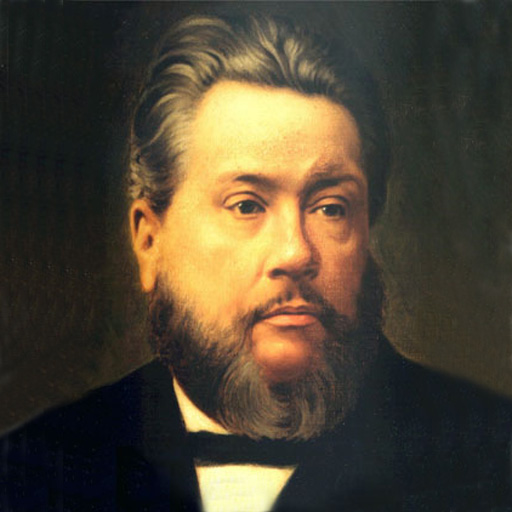
I heard this at a prayer meeting recently:
“There is no such thing as a great man or woman of God. There is only a man or woman – and a great God.”
Do you agree?
I guess many of us would think of C.H. Spurgeon as a great man of God. But I don’t think he’d agree. Here’s a fantastic Spurgeon quote I was sent last week. He puts the emphasis and glory exactly where it ought to be.
“Consider what you owe to his power; how he has raised you from your death in sin; how he has preserved your spiritual life; how he has kept you from falling; and how, though a thousand enemies have beset your path, you have been able to hold on your way. Consider what you owe to his immutability. Though you have changed a thousand times, he has not changed once.”

I've been enjoying more than my fair share of 50th birthday parties, and a common theme of discussion is the desire to just "slow down a little." It's notable that I need just a bit more sleep, and that I can't pull the long hours that I used to do even in my late 40s. I'm tempted to think that I deserve an easier life now, "because I've earned it."
John Wesley felt the same, but I was shamed to see at what age!
Just reading the list exhausts me! Of course, such frenetic activity can be motivated by fear, but in this case, Wesley was motivated by God's grace to him, and the understanding that every waking moment must be spent in the saviour's service. Of course we need to be sensible with rest, and make sure we are "working for the Lord" for the right reasons, but this remarkable example encourages me to seek productive activity for the sake of Christ, not self indulgent sloth, because he's earned my rest, not me.
This week was our tenth Bible-Centred Youthwork Conference for (mainly) full-time children’s and youth workers. For those on the team it’s four days – long hours – draining – challenging – humbling – inspiring. And a joy and privilege…
A joy:
A privilege:
I always come back exhausted – but also thrilled by seeing God at work, and being with so many of His workers in the harvest field. Forgive me if it sounds overly pious, but it genuinely is a joy and privilege every year.

It's the last week of December. A time to thank God for the highs (and the lows) of the year gone by. And a chance to think about the year ahead. If you're anything like me, you are probably planning the usual keep-fit campaign (which will doubtless falter within the first couple of weeks of the new year). But here in the Good Book Company offices we are also planning what we are going to read in the first few weeks of 2012. We're thinking about how to ensure our "love may abound more and more in knowledge and depth of insight, so that [we] may be able to discern what is best and may be pure and blameless until the day of Christ" (Philippians 1:9). We're thinking about which tools might be helpful to each of us as we aim to be "transformed by the renewing of [our] mind" (Romans 12:2). And we thought you might be interested to see our list. So here are some of our book picks for early 2012...
Alison (Children's Editor)What are you hoping to read in 2012? Comment below. Whatever you choose to read in the coming year, we hope it encourages you in your walk with the Lord.

“God I thank you that I am not like others—hypocrites and slanderers” (with apologies to Luke 18 v 11).
I’ve been reading through 1 Peter and reached 2 v 1: “Rid yourselves of all malice and deceit, hypocrisy, envy, and slander of every kind.” Yes, I struggle with some of these, but, “At least I’m not a slanderer” I thought.
Later that morning, while cycling to work, I was thinking about a recent and very painful situation, and started having a conversation in my head. “I should have said more about…” “Do they realise how unfair that felt?” “That’s not what they said last time – they’ve changed the goal posts.” “They did just the same things to me last year” and so on.
Suddenly I sat up straight. (Well, as much as you can on a racing bike!) Just half an hour earlier I’d been congratulating myself on not slandering people. But here I was doing just that in my head. Traditionally “slander” is spoken. But if the Lord Jesus says we can commit adultery in our hearts (Matthew 5 v 28) then I’m sure we can commit slander in our minds.
So what’s the solution? It’s all too easy when you’re hurt or angry to start thinking horrible things about the people involved. My aim now is that as soon as I catch myself doing so I’ll first ask for God’s forgiveness and help to change; then pray for the people concerned, thanking God for them and asking Him to be working His good purposes in their lives. I’m hoping that will help me be more godly in my thought life.
My only problem with putting this in a blog is that now, when I tell someone I’ve been praying for them, they may start wondering why I’ve been slandering them in my mind…

The snow had started falling and the setting was perfect. What better way to start Christmas?
I was waiting at Sheffield station to catch a train to London late last night, quietly drinking a cup of coffee, when a rich heavenly sound filled my ears. Not just any tinny choir of children, but the Sheffield Philharmonic choir echoing round the atrium at the shiny new station forecourt. The voices were well balanced - strong tenors and basses giving glorious counterpoint to the pitch perfect sopranos and contraltos. Under the echoing roof with surprising good acoustics, the total effect was simply stunning. Having been to and taken part in hundreds of carol concerts, you could forgive me for being blasé about such things.
But the words of praise caught me up: Veiled in Flesh the Godhead see, hail the incarnate deity. Born as man, with man to dwell, Jesus our Emmanuel…' . I shed a tear (yes! me!) and prayed a prayer of gratitude over my steaming tea cup...
But then another, more disturbing, observation. While there were a few who stood, listened and applauded appreciatively, there were many who did not. Most of the 20- and 30-somethings walked past without registering any interest at all. Some openly mocked and laughed, while others had faces twisted in distain. Why?
It may just be that this traditional music is not to the taste of this hip-hop and indie-band soaked generation, or perhaps it was just an inconvenience on their commute home. It may be that, like the Grinch, their hearts are just several sizes too small. Or it may be that this age range is more hostile to the God dimension of Christmas than others. Without stopping them to ask, we'll never know. But there may be some disturbing implication for the future of our Christmas outreach here.
Christmas is perhaps, our biggest opportunity for Gospel-telling we have. People come in their droves to church at Christmas, and we look with gratitude over church buildings filled to the rafters. But who is this traditional package not reaching? It is probably touching the over 50s who are sentimental for the the experiences of their youth. It may have many younger children who are brought along. But our gratitude to God for the size of the crowd may be blinding us to our failure to engage with a whole generation of more cynical people, who are actively turned off by Victorian choral music.
As you run, we hope, packed Christmas Carol service events over the next two weeks, just cast an eye over the congregation. How many in their 20s and 30s are present?
And then ask the question: Is there an alternative Christmas event with a different kind of music that will reach them?

I recently caught the tail end of Radio 4’s Today programme. A presenter was apologising for a remark made earlier in the programme. In a discussion about inventions she’d commented that children would probably vote Father Christmas as one of the best ever inventions. A flood of tweets and texts followed. People were concerned that children able to hear the radio as they journeyed to school by car would discover that Father Christmas is only an invention!
The mock-horror tone of the complaints and the light-hearted “grovelling” apology do not altogether disguise the fact that many people today hold very dear a child’s “right” to believe in the existence of Father Christmas. Undermining that belief in any way before the “appropriate” age is viewed as tantamount to child abuse.
How should Christians respond to these expectations? In our over-commercialised, secular culture, where the true Christmas story is largely buried or avoided, it’s not surprising that non-Christians cling to the modern “myth” of Father Christmas with a religious-like fervency. But what about Christians? Don’t we have compelling reasons to be different?
This tradition of safeguarding the belief of small children in Father Christmas is also alive and well in our churches. It’s not hard to imagine the outrage if someone were to spill the beans about Santa at a Christmas family service. In fact, this is precisely what happened to a preacher that I know in the early days of his ministry. Interestingly, the unhappy complaints came not from visitors, but church members.
So, what should Christian parents be teaching their children about Father Christmas? I and my husband took the approach that there are two Christmas stories—one is magical but fake, whereas the other is thrilling and wonderfully true. And from their earliest days we wanted our children to know the difference.
We didn’t want our children to reach an age where they realised that we hadn’t told them the truth about Father Christmas, and to draw the parallel conclusion that we were not telling them the truth about Jesus Christ.
We didn’t want them to miss out on the fun and enchantment of Christmas. But we wanted them to be enchanted with the true story of Christmas, and the wonder of Jesus Christ’s birth into our dark world—a wonder that needn’t fade as they grew older but could sustain them all through their lives because it is true.
We wanted to have fun with the Christmas traditions too. Precisely because we’ve always told our children that Father Christmas is made-up, we’ve been able to play with all the Santa traditions—stockings mysteriously filled with gifts, half-eaten snacks on Christmas morning, and so on—without any fear of misleading our children.
Of course we need to be sensitive to non-Christian friends and family at this time of year. But in our own homes and families, let’s be unabashed in being different from our culture, honest with our children, and gripped with awe and wonder by the true story and person of Christmas.
 A haiku is a short, three-line poem which always follows this pattern: