| 10+ copies | 30% off | £5.60 each |
| 25+ copies | 40% off | £4.80 each |
| 50+ copies | 50% off | £4.00 each |
Discounts applied automatically in your basket.
When you make the purchase, links to your ebook files (EPUB, MOBI and PDF) will be emailed to you immediately. We will ship the paperback to the shipping address given.
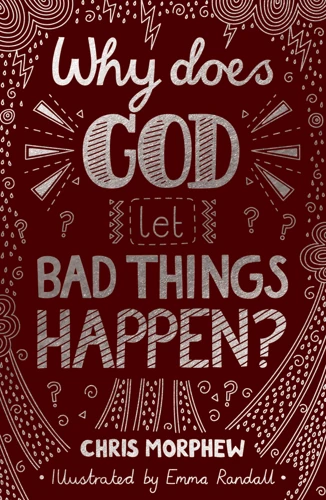
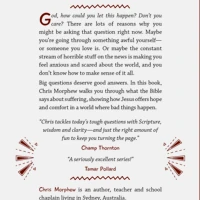
Sooner or later, kids have big questions about God, life, faith and the Bible, especially when their friends start asking them about what they believe. A common one is: Why does God let bad things happen?
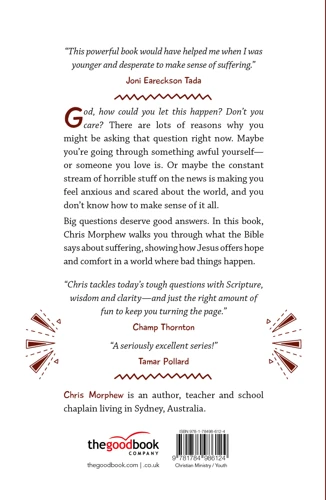
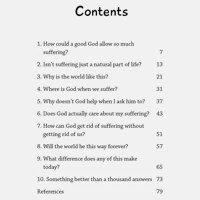
Big questions deserve good answers. This warm, reassuring and fast-paced book looks at what the Bible says to help 9-13s think through this big question for themselves. It puts the problem of suffering in the context of the Bible's big story, and encourages readers to see that whatever they're facing, Jesus is with them. Lively stories and illustrations make this book easy for this age group to engage with.
Emma Randall has illustrated many books, including Diary of a Disciple.
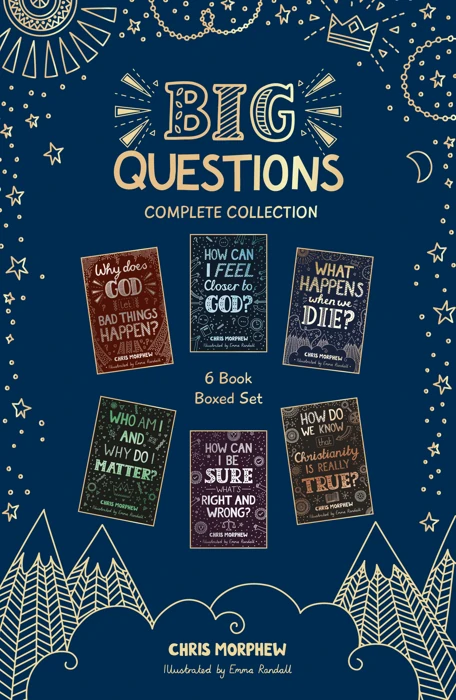
Why Does God Let Bad Things Happen? is part of the Big Questions series: fun and fast-paced books walking kids aged 9-13 through what the Bible says about some of the big questions of life, and helping them to grow in confident and considered faith.
I would not recommend this book.
The entire time was spent not answering a single question that he brought up, everything was explained with "We don't know why bad things happen, but whatever God says goes, so we're not going to question it!"
He was completely avoidant in directly responding to why God lets bad things happen, he merely said to not question anything because someday they will get better, even though for 2000 years, they have *NOT*.
Decent read, I didn't mind reading through it as the language was very simple and easy to understand, not a lot of brains needed to actually get through it so i would consider it relatively relaxing to read, and also quite enjoyable. The actual content itself was much more introductory towards the concept, a book like this is too short to discuss morality and its relation to religion, and goes by a standard axiom of what defines bad and good which is essentially just that any unpleasantries are considered bad, and any pleasantries are considered good, so why is the ...world unpleasant? The arguments presented can seem to ramble on at times, I don't think its bad, but not everything really contributes to a larger structure which works to create coherent meaning.
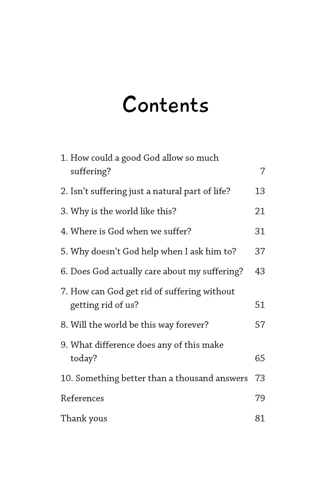
The book doesn't actually answer the question of why god lets bad things happen, but claims that such a question is an incorrect question to be asking in the first place. When reading this as an answer to the question, it can feel at times as if Morphew is using circular reasoning, and that he has no answers at all. It would be useful if this book clarified that it is mainly considered a discussion of christianity which promises a perfect world, and the dichotomy between the promised and the reality of an imperfect "bad" world. Explaining a christian view around the current state of the world, rather than answering a question regarding why god lets such things happen, as the answer to that will always be unknown.
Very informative and answers the question and a lot of adjacent questions