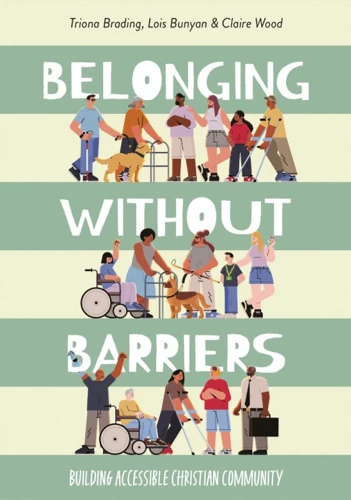
Belonging without Barriers casts a vision of inclusion and full belonging within our churches and other Christian communities for those with additional needs.
Brading, Bunyan and Wood begin by exploring the theological basis for this vision, aiming to inspire the reader with God’s love for the weak and marginalised in society. They then move into a practical section outlining a range of different experiences we are likely to encounter, including Autism, Learning Disabilities and physical disabilities.
Each chapter contains up-to-date research, personal accounts, interviews and a range of specific, actionable ideas, including changes that any individual within the church could make. This book shares a vision not just for inclusion, ...but for full integration and belonging for those with additional needs. Throughout, the emphasis is that this is an ‘every believer ministry’ as we all grow in love together as Christ’s disciples wherever he has put us.
This is a very interesting book, well worth reading regardless of who is part of your church family at the moment.
It is a book that encourages us not just to think about how we can help people be with us in church on a Sunday, but more than that to belong, to take part in all of the things that we would say you should do in order to be part of a church, like service or small groups.
The book starts with a section to help give us a biblically shaped view of disabilities, rather than a worldly ...one. How Christ views us all, how we can love like Christ loves us and what being part of a church family means. This first part is a helpful section that can really be applied to so many different situations.
The second half is lots of practical advice, thinking about various different particular needs, whether physical or related to neurodivergence. While there is always a lot more that could be said on any of these, it provides a great starting point for discussion.
All. Throughout their are personal stories of people own experience of seeking to belong in their churches, and how that has been helped or encouraged, which are both informative and warming to the heart.
I recommend reading this book, we end it with our women’s book group at church, and it generated lots of good discussion.