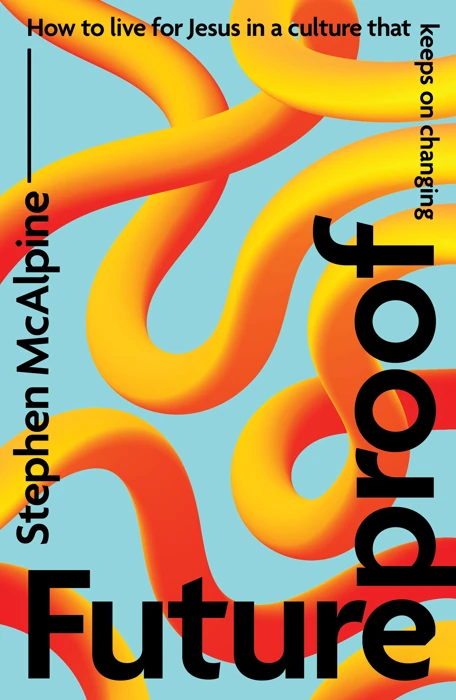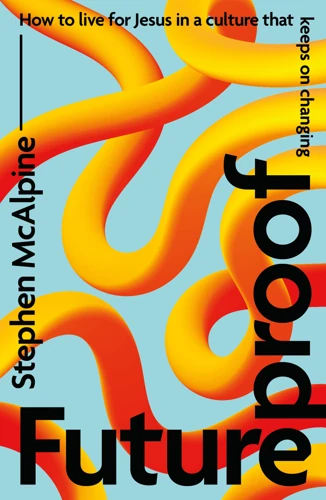
We are living in a time of rapid cultural change, when Christian views are often seen as outdated and even dangerous. This can leave us feeling anxious about how to live out what we believe and uncertain about the future of the church.
Stephen McAlpine’s first book, Being the Bad Guys, sought to explain how our culture ended up so far away from biblical Christianity and how to reach out with the gospel wisely. In this book, he explores where things are heading and what we can do about that now, both as individuals and as a church.
Stephen examines secular narratives about purpose and authenticity, connectedness and progress, ...and compares them to the promises made by the Bible. He shows that the Bible offers a more satisfying, more realistic and more hopeful vision of the future.
He also examines the things that cause many Christians and non-Christians to be anxious about the future: technological change, political polarisation, clashes over climate and culture wars around gender and identity. He reminds readers that God is in control and helps them to think through how they can live wholeheartedly for Christ, facing the challenges of the future with confidence and leading the way in terms of citizenship, stewardship and community.
(Review written for 'Futureproof')
Definitely a great read for today's church, addressing the issues we need to be aware of in our changing society.
(Review written for 'Futureproof')
This helpful book covers a lot of necessary topics that many people aren’t talking about, but need to be. Part One of the book goes through 3 reasons the gospel is better than what culture has to offer while Part Two looks at ways the church can flourish in certain circumstances.
Futureproof is saturated with presenting the gospel as the better option to all the false comforts and idols that society presents. He touches on a wide range of subjects ...like technology, discipleship, pronouns, a Christian’s dual-citizenship, self-careeducation, and more. This short book packs a punch and I think this would be great to read with friends to really delve into these important topics.
I particularly appreciate the grace-filled, gospel-centered perspective that McAlpine writes with. He does not claim that all Christians must _____ (homeschool, ignore pronouns, refuse to use social media, etc.), but instead he lays out what the Bible says, encourages the reader in their Christian liberty, and points to Jesus.
A few quotes I especially liked:
“Our aim is not to win every argument to soothe our anxieties. Nor is it to retreat from the public square, blocking our ears to the cries of our neighbors. Our aim is to be a non-alarmed community that trusts in God because he is in control. Not so that we can say “I told you so” to those losing their heads in the cultural churn, but so that we offer a viable and attractive alternative that has our kind King at its center.” Pg 29
“The irony, of course, is that although we often have a sharp perception of the failings and limitations of our political and cultural opponents, that lens becomes opaque when it’s turned towards ourselves.” Pg 67
There’s also an application guide available as a free download.
(Review written for 'Futureproof')
This book addresses a variety of timely topics related to how Christians can think about the church's role in a swiftly changing, secularizing society. Stephen McAlpine encourages his readers to consider ways that the church is uniquely poised to address issues like the loneliness epidemic, and he writes about ways that the church can be an embodied, communal witness to a different way of life. Over different chapters, he reflects on multiple social issues, political topics, and broader cultural problems, including ecological issues and the fast pace of new, developing technologies like AI.
McAlpine encourages Christians to take hope in the promises of God, even when they feel discouraged about the state of the world, and he also challenges Christians to maintain a distinctive worldview, instead of believing in self-focused ideologies that prioritize autonomy above all else. The book deals with some high-level concepts in very accessible ways, and in addition to explaining and defending his points with Scripture, McAlpine also shares story-driven examples. He uses research findings and anecdotes to illustrate and explain his points, and this will be highly readable for people in different walks of life.
This is a helpful book for people who want to think more deeply about the church's witness in our current society. McAlpine addresses a variety of issues without a harsh culture warrior tone, and since he is Australian, it was nice to read a book that addresses the West more generally, instead of primarily focusing on American culture. Overall, I enjoyed this, but because McAlpine addresses so many different topics in a relatively short book, he can't go especially deep with each one. This is a great primer for adults and teens, but if someone has already read and thought deeply about these issues, not much in this book will be new to them.
Note: I received a free copy from the publisher in exchange for an honest review.